
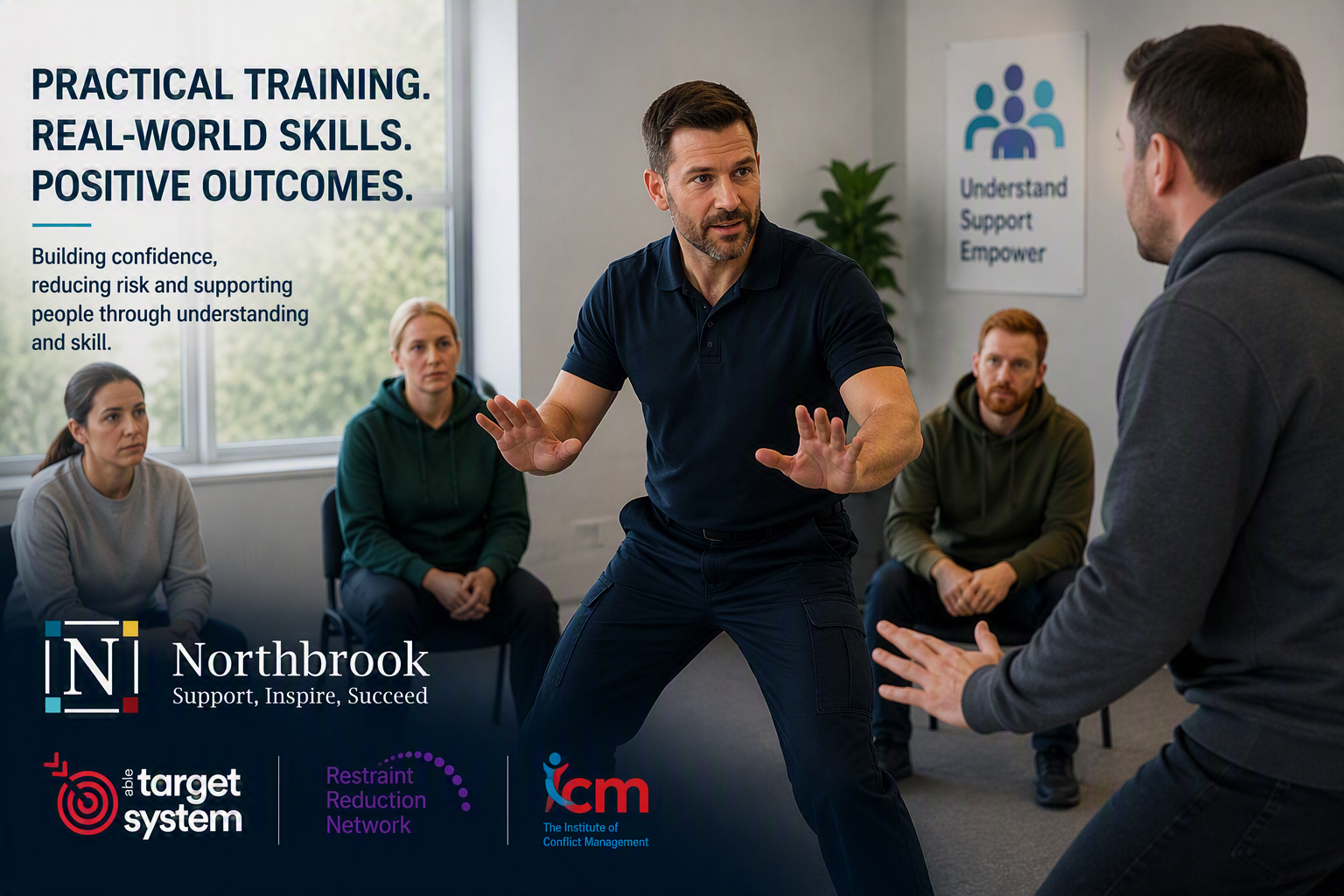
As an organisation, a manager or a leader, have you ever struggled to find training that genuinely supports your staff to work in the best way possible?
Training that helps people provide the right care and support. Training that helps them understand behaviours that may challenge. Training that gives them the skills and confidence to keep themselves and others safe. Training that is delivered by someone who not only understands the theory but has spent years applying it in real-world settings.
For us, that's always been important.
Over the last 15 years, we've worked alongside individuals with a wide range of needs and behaviours across health and social care. During that time, we've seen first-hand the difference that knowledgeable, confident and well-trained staff can make. We've also seen the challenges that arise when staff don't have the right tools, support or understanding available to them.
That's exactly why we've chosen to expand our training portfolio.
Recently, we invested in refreshing our own knowledge, skills and qualifications by undertaking six days of intensive training with Able Training Solutions in Grantham. This wasn't simply about adding another course to our website or ticking a box.
It was about making sure that the training we deliver reflects current best practice, recognised industry standards and, most importantly, the needs of the individuals being supported.
Following this training, we're proud to be able to deliver the Able Target System (ATS), an approach to behaviour support, breakaway skills, physical intervention and restrictive practice that closely aligns with our own values and beliefs around person-centred care.
Why We Chose the ATS Model
There are many training providers and behaviour support models available, and many of them deliver positive outcomes.
When we were looking at which approach to adopt, we weren't simply looking for practical techniques. We wanted a system that focused on understanding behaviour, reducing restrictions wherever possible and supporting individuals in a way that promotes dignity, safety and positive outcomes.
This is where the ATS model stood out.
One of the key principles behind the model is understanding the causes of behaviour rather than simply responding to the behaviour itself. Rather than focusing solely on what we see happening in the moment, the model encourages us to understand what might be driving that behaviour and what preventative measures can be put in place to reduce the likelihood of escalation.
One phrase that particularly resonated with us throughout the training was: "Connection before correction."
Before we attempt to redirect behaviour, manage risk or intervene in a situation, we should first seek to understand the individual and the reasons behind what they are experiencing.
Another important principle is that of unconditional positive regard. Regardless of the circumstances or challenges being faced, individuals should be treated with dignity, respect and compassion.
For us, these principles reflect exactly how behaviour support should be delivered.
Recognised Standards You Can Trust
A significant factor in our decision was the quality assurance behind the training.
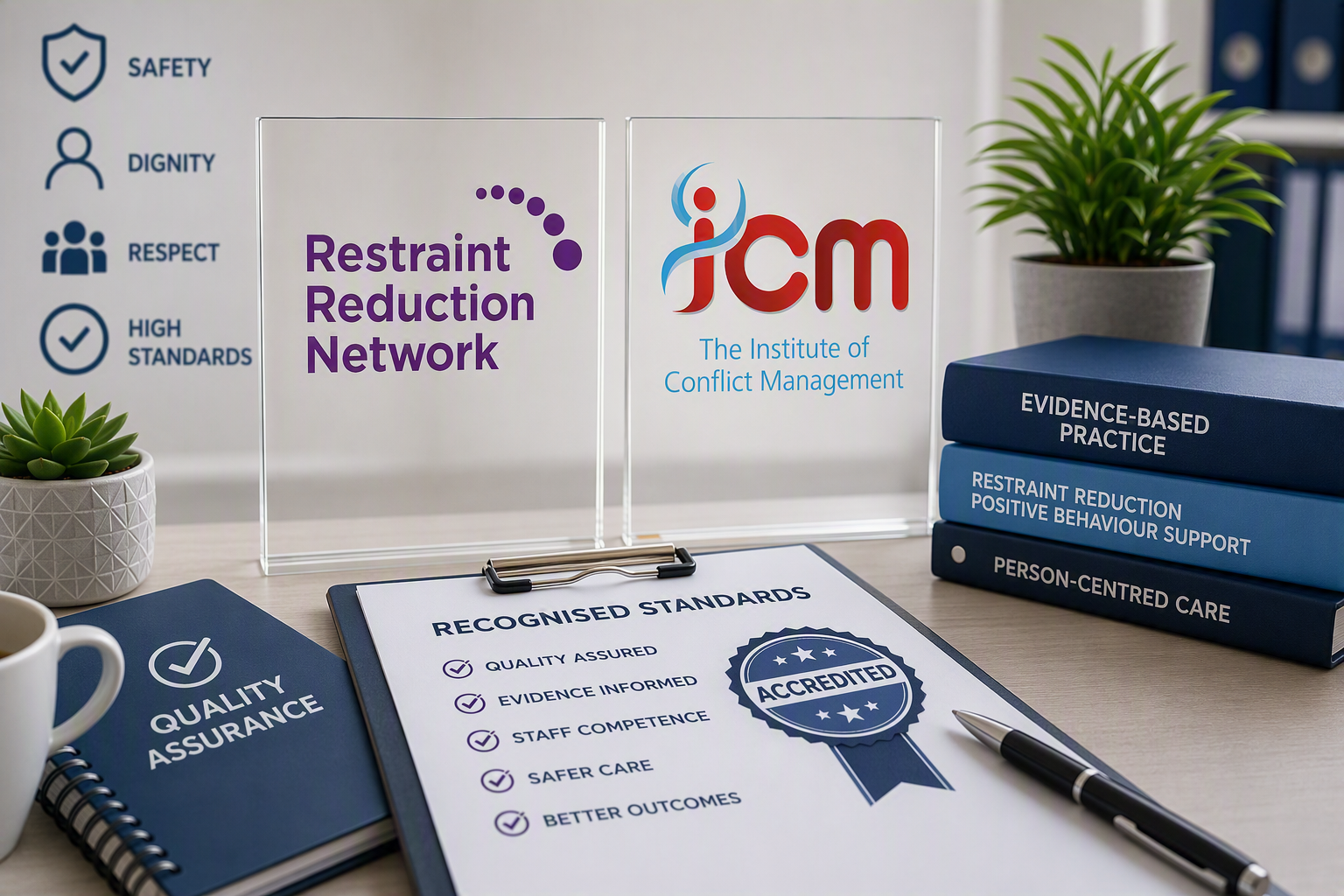
The ATS model is Accredited with the Restraint Reduction Network (RRN) Training Standards and is also recognised by the Institute of Conflict Management (ICM).
These recognised standards gave us confidence that the training was not only robust and evidence-informed, but also aligned with the expectations placed upon health and social care providers today.
With increasing emphasis on reducing restrictive practices and ensuring staff are appropriately trained, organisations need confidence that the training they invest in is recognised, current and delivered for the right reasons.
The Care Quality Commission (CQC) continues to place significant importance on training that aligns with the principles of restraint reduction, positive behaviour support and person-centred care. By delivering training aligned to recognised standards, we can support organisations in providing safer, more effective care.
What Training Can We Now Offer?
As accredited trainers, we can now offer three levels of training depending on the specific needs of your organisation and workforce.
One-Day Behaviour Support and Personal Safety Course
This course focuses on building a solid understanding of behaviours that may challenge, alongside practical strategies to keep staff and individuals safe.
It includes:
Understanding behaviours that may challenge
Behaviour as communication
Positive behaviour support principles
De-escalation techniques
Low-level personal safety skills
Simple breakaway techniques
Click here for more information: PMVA - Behaviour Support & Breakaway Training | Northbrook Training
Two-Day Behaviour Support and Physical Intervention Course
This programme builds upon the foundations established during the one-day course and introduces additional practical skills for staff working in higher-risk environments.
It includes:
Behaviour support and assessment
Prevention and de-escalation strategies
Breakaway techniques
Responding to escalating situations
Physical intervention skills
Safe and proportionate responses to risk
Click here for more information: PMVA - Behaviour Support & Physical Interventions Training | Northbrook Training
Three-Day Restrictive Practice and Physical Intervention Course
Designed for organisations supporting individuals with more complex needs and higher-risk behaviours, this programme covers the use of restrictive interventions as a last resort.
It includes:
Restrictive intervention frameworks
Safe holding techniques
Legal and ethical considerations
Decision making and accountability
Post-incident reflection and learning
Risk reduction strategies
Click here for more information: PMVA Behaviour Support & Restrictive Interventions Training | Northbrook Training
Tailored to Your Organisation
One of the things we particularly value about the ATS approach is that it isn't a one-size-fits-all model.
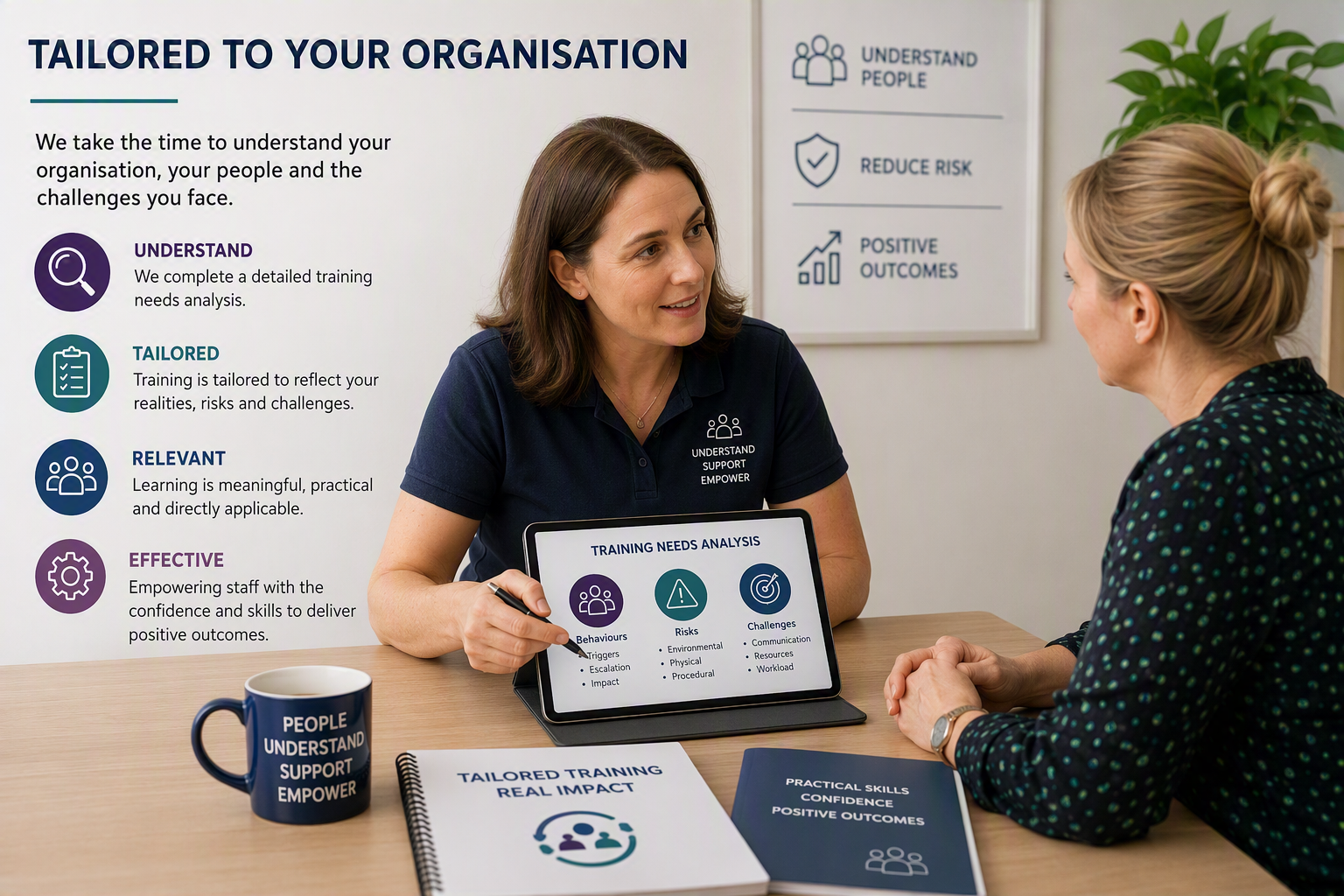
Before delivering any training, we complete a detailed training needs analysis with the organisation. This helps us understand the behaviours, risks and challenges staff face in their day-to-day roles.
The training can then be tailored to reflect those realities, ensuring that the learning is relevant, meaningful and directly applicable to the people attending.
Because effective behaviour support isn't about teaching generic techniques.
It's about understanding people.
It's about recognising the reasons behind behaviour.
And it's about giving staff the confidence and practical skills to respond appropriately when support is needed most.
Looking Ahead
We're genuinely excited to bring this training to organisations across health and social care.
This isn't simply about teaching breakaway skills, physical interventions or restrictive practices.
It's about helping staff better understand behaviour, build confidence, reduce risk and create safer environments for everyone involved.
Everything we deliver is centred around the wellbeing of both the individuals receiving support and the staff providing it.
If you're looking for behaviour support training that is practical, person-centred and Accredited with recognised standards, we'd be delighted to talk about how we can support your organisation.
And if there's one thing we'd like to leave you with, it's this:
"If we ignore the whispers of behaviour, we must be prepared to deal with the shouts."